
Lessons From a Squirrel: The Future of Smarter AI
Studying how squirrels move, remember, and hide food is helping researchers design AI that handles uncertainty better

Hello, fellow AI enthusiasts!
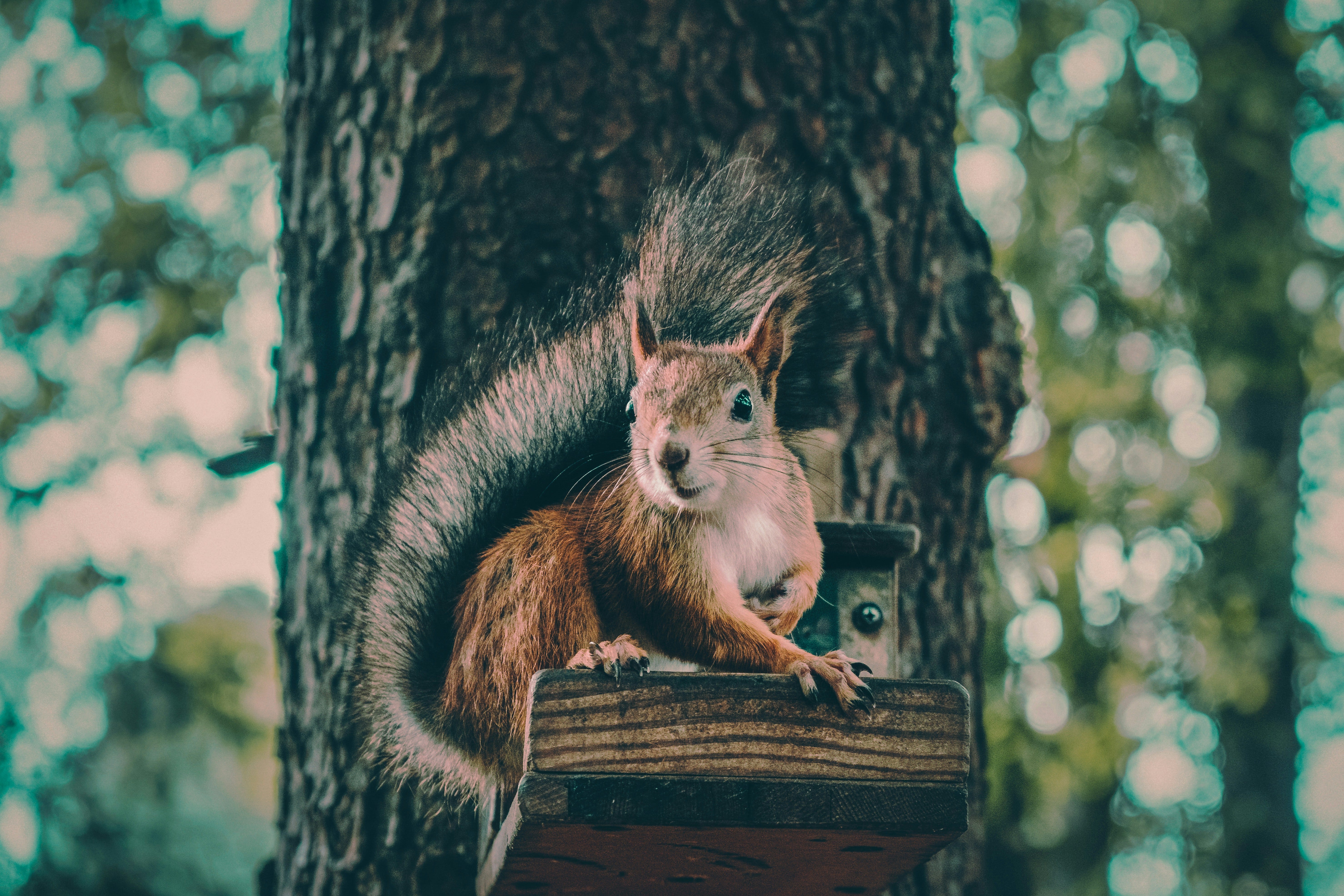
In this edition, we look at a topic of how researchers are drawing on squirrels’ hunting habits, spatial memory, and food-hiding strategies to build AI capable of operating under uncertain conditions.
Introduction
We know how squirrels survive even in situations of uncertainty. They combine fast physical movement, memory for future action, and awareness of observers, all in one ecological loop.
Researchers Maximiliano Armesto and Christophe Kolb of Taller Technologies argue that such strategies can help boost the performance level of Agentic AI.
Their recent research paper explains how adopting the squirrel’s innate abilities of adaptive locomotion, scatter-hoarding (food caching), and audience-sensitive caching can increase the capability of AI agents, which is generating more buzz over time.
Key Findings Explained
The researchers combined existing squirrel studies (fox, gray, and red squirrels) on locomotion (movement from one place to another) and scatter-hoarding (food caching).
They then connected these behaviors to the development of agentic AI in terms of loop linking, planning, action, feedback, organized storage of knowledge, and actions for checks and validation.
Integrating squirrel-based evidence, they propose a formal model called SCRAT (Stochastic Control with Retrieval and Auditable Trajectories). Three primary hypotheses based on different types of squirrel examination are as follows:
For speedy reaction: Real-time adjustments with quick feedback plus predictive compensation can help AI remain strong even when things go wrong.
Remember with intent: AI memory should be based on future action, not just trained data or storage.
Self-Check: AI systems should have the capacity for self-checking in case of any accidental information leakage. In short, they should incorporate verifiers.
Read More: Sora Is Gone, and It’s Taking Our Disney Dreams With It
Limitations
The way squirrels work may not guarantee success for human-made AI systems. The paper also notes that verifiers can be incomplete and that ecological fitness is not a human objective. Therefore, validation is needed. These claims should be taken as testable theories.
Why This Matters
The rapid growth of daily AI use indicates that researchers need to consistently work on ensuring supreme-level performance. The paper proposes that adaptation, structured recall of information, and in-loop monitoring capability can help reach that level.
One-Sentence Takeaway
If we can adopt the squirrel’s daily habits of acting, remembering, and self-checking into current AI systems, agentic AI may perform even better under uncertainty.
Source
Coupled Control, Structured Memory, and Verifiable Action in Agentic AI (SCRAT)
Maximiliano Armesto, Christophe Kolb
Taller Technologies
arXiv (cs.AI)
2026
https://arxiv.org/abs/2604.03201
Editorial Note:
This article draws primarily from the research paper https://arxiv.org/abs/2604.03201. Additional insights were obtained using AI tools and online resources to enhance clarity. The content represents my personal interpretation and understanding of the findings.